
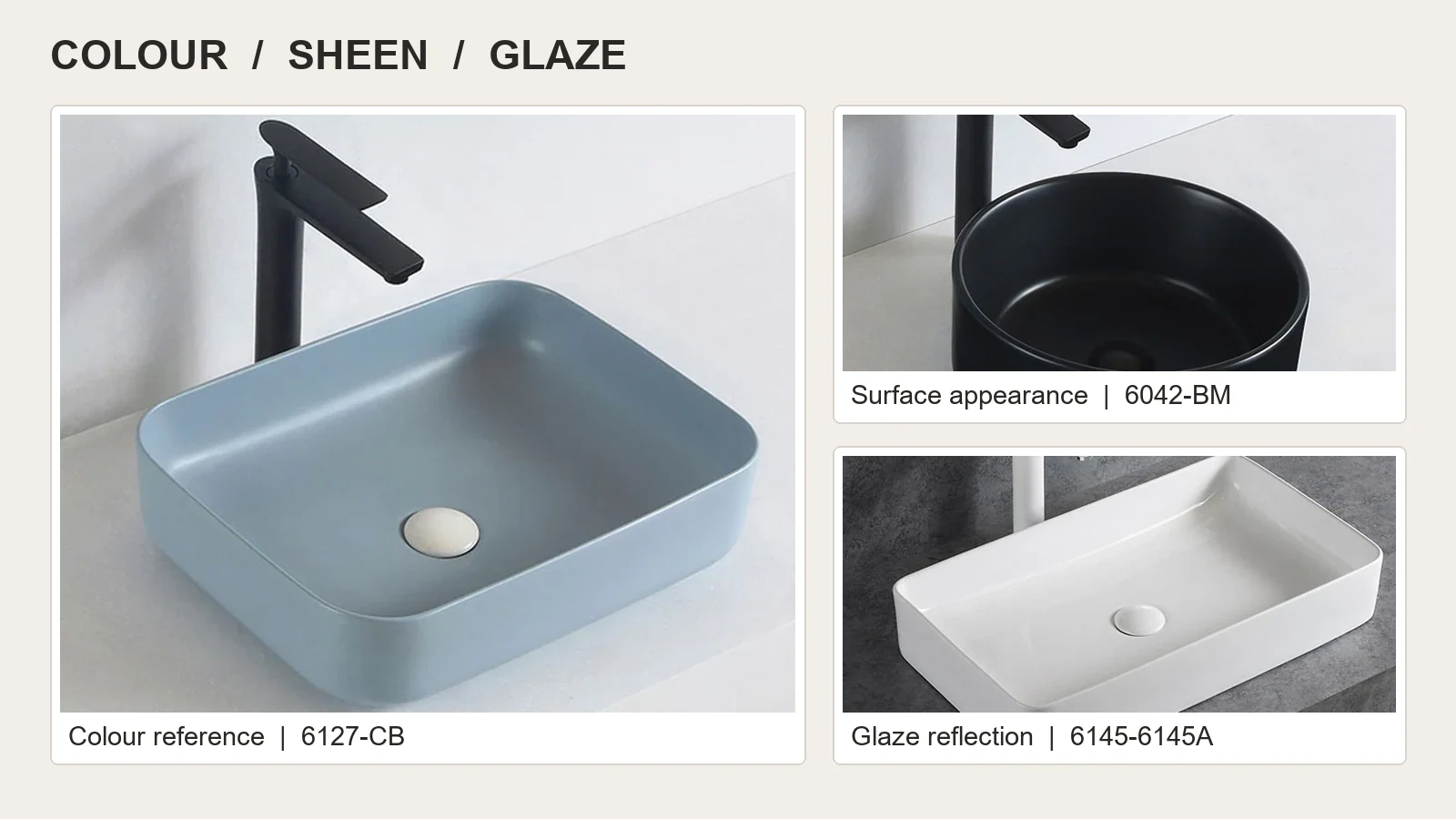
Colour names and screen images are weak controls for a ceramic finish. Two items described as “matte black” may differ in sheen, warmth or surface texture; a gloss finish can expose a different set of visual marks. Approve what the buyer will actually see after installation.
Use the physical sample as the reference
Request a sample of the exact model and proposed finish. View it under the lighting expected in the project, including daylight and artificial light if both matter. Compare the bowl, rim and exterior, and note which surfaces remain visible once installed. Record the model code, finish code and sample date.
CADIA lists matte colour basins and colour finished basins. The category labels identify catalogue groupings; they do not confirm every colour is available on every shape or that two models share an identical glaze.
Agree how variation will be judged
| Finish question | Buyer action |
|---|---|
| Is colour consistent across a room set? | Compare several pieces from the proposed production lot under agreed lighting |
| Are rim and underside appearances acceptable? | Mark visible surfaces and acceptable variation on the sample record |
| Is the finish suitable for the maintenance regime? | Request model-specific care instructions and test cleaning products separately |
| Can replacement units match later? | Agree sample retention and replacement acceptance method |
Matte surfaces may show deposits or handling marks differently from glossy ones, while a dark glaze may make some residue more visible. Actual cleaning behaviour depends on the finish and water conditions. Ask for care guidance for the selected model instead of assuming one cleaning method fits all ceramic colours.
Recheck the finish at production and packing
Use the signed sample and agreed lighting to inspect a representative set before dispatch. Verify that finish codes appear correctly on cartons and packing lists, especially in a mixed-colour order. If a later batch is required, compare it with the retained sample and decide whether a new approval is needed.
Compare colour and sheen separately
A colour target and a surface finish are two decisions. A black basin can be low-sheen or reflective; a white basin can look warmer or cooler under different light sources. Set one approved physical reference for colour and another observation for sheen or texture where needed. Examine the same surface orientation on each sample, since a curved bowl reflects light differently from a flat rim.
The comparison image uses unchanged catalogue photos of 6127-CB, 6042-BM and 6145-6145A. It helps a buyer frame questions about colour, surface appearance and glaze reflection; it is not a calibrated colour standard or evidence that a finish option is available on another model. Screen settings, lighting and camera exposure prevent reliable approval from the article image alone.
Write a finish approval sheet
Record the model and finish codes, sample identifier, lighting conditions, surfaces visible after installation, accepted variation and cleaning method to be tested. Place several samples side by side if the project needs a uniform bank of basins. Assess the rim, bowl, exterior and repair or replacement implications. If the sample has a flaw accepted as an exception, specify whether that exception is allowed on production pieces.
A cleaning trial should use the actual products and methods the facility intends to use. Note whether residue, water marks or handling prints are visible after cleaning and drying. Do not claim that matte or glossy ceramic is universally easier to maintain; performance depends on glaze, water chemistry, traffic and cleaning practice.
Preserve the reference for later lots
Keep a labelled approved sample and photos of the viewing setup, but use the physical sample for final colour judgement. For a follow-up order, compare new samples with the retained reference before production. If a discontinued pigment or glaze formulation makes a close match uncertain, decide whether to accept a controlled difference, isolate the new lot by area or choose another finish. Make the decision before mixing units in one project zone.
Send a shortlist of models, colour target and intended application through CADIA’s contact page for availability and sampling details.