
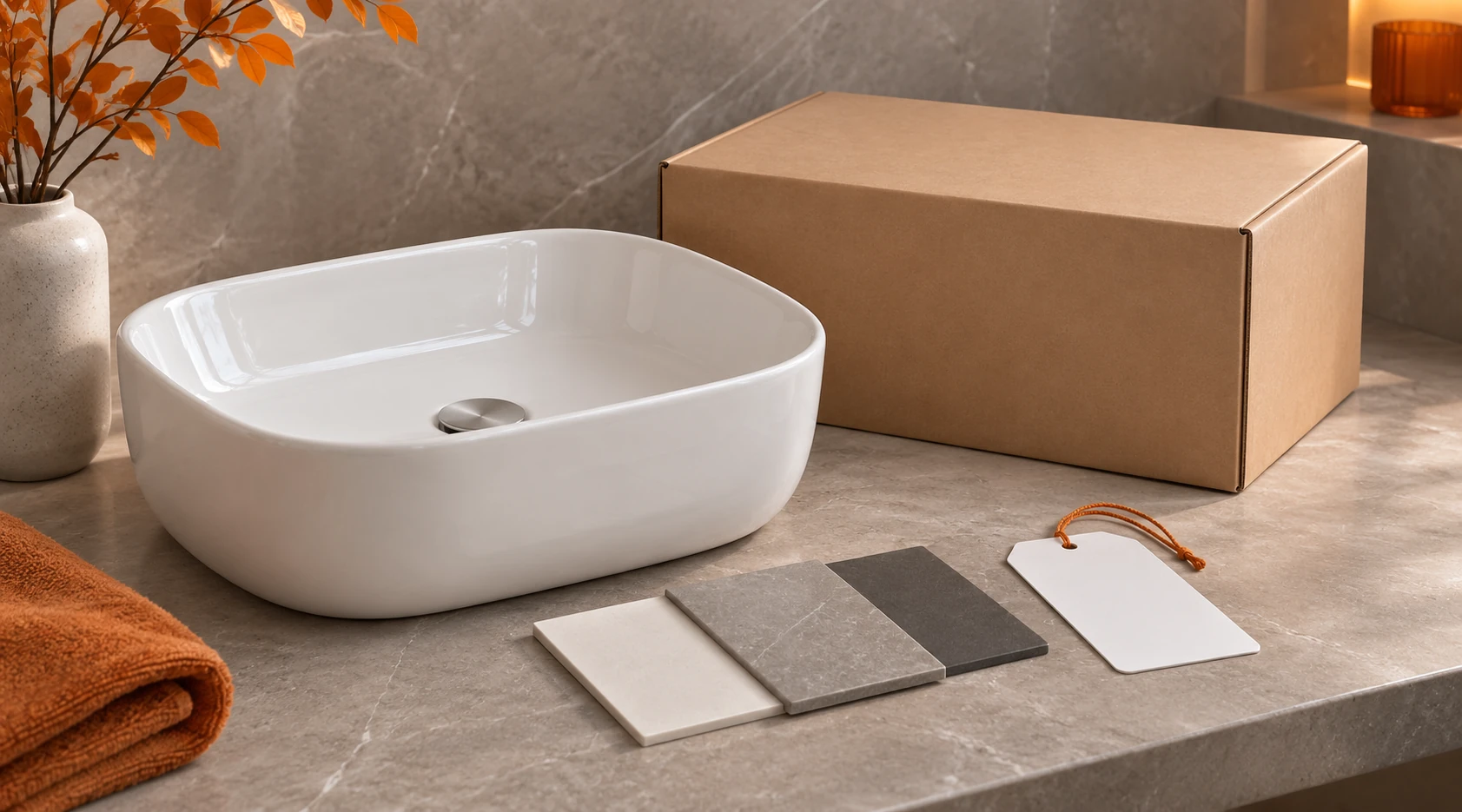
“OEM” can mean a logo on an existing product, a new colour, modified packaging or a new ceramic form. Those requests have different risks and approval paths. Define the requested change before asking for a price or production date.
Begin with a controlled design package
Send a dimensioned drawing, 3D file if available, intended installation, tap and waste requirements, target finish, destination market and forecast quantity. Mark mandatory dimensions separately from preferences. If the request starts from a catalogue model, identify that model and every proposed change to it.
Ask the supplier to return a feasibility review that names open questions. A new shape may require tooling and firing trials; a logo or carton change may not. The supplier should confirm what is technically possible for the specific model, including minimum quantities and ownership of any new tooling, before either side treats the concept as approved.
Keep each approval distinct
| Stage | Approval record to retain |
|---|---|
| Design | Drawing revision, dimensions and responsibility for changes |
| Sample | Signed or otherwise traceable physical sample, finish reference and deviations |
| Production | Model, revision, quantity, inspection plan and approved variation |
| Packing | Inner protection, carton artwork, markings and pallet or loading requirements |
A sample can confirm appearance and fit but does not automatically validate a production run or shipment packaging. Agree how first-off pieces, in-process checks and final inspection will be compared with the sample. If a colour is specified, use a physical reference and define the viewing conditions.
Prevent a late packaging surprise
Confirm whether labels show the correct model, finish, quantity, destination marks and any buyer barcode. Test the intended carton and protective materials against the agreed handling and transport conditions. A beautiful sample in a generic carton is not a complete export specification.
Decide whether the request is decoration or product development
Put each proposed change in one of three buckets: an existing model with buyer artwork or packaging; an existing form with a different finish or small configuration change; or a new ceramic geometry. The first may mainly affect artwork control. The second needs a sample showing the actual appearance and hardware interface. The third can introduce tooling, firing, dimensional and ownership questions. A single “OEM price” cannot fairly cover all three.
For a new shape, ask who supplies the master drawing, who approves a revised mould design, and who owns or can use the tooling after the project. Decide how design files and sample revisions will be identified. If a proposed adjustment changes basin depth, waste location or support surface, return to the installation drawing before accepting the cosmetic improvement.
Set hold points that protect both parties
A practical timeline has explicit pauses: feasibility response; sample approval; first-off production review; pre-shipment inspection; and final packing release. At each hold point, record what was examined and who authorised the next stage. If the sample is approved with an exception, state how that exception will be checked in the production lot. A photograph with no model code or revision is not a sufficient approval record.
When samples are shipped, label them with model, finish, drawing revision and date. Keep one approved reference where later inspection can use it. If a replacement sample differs, retire the old reference rather than leaving two apparently valid samples in circulation. The same discipline applies to carton artwork and barcodes.
Compare quotations on a common basis
Ask whether the quote includes design work, tooling, sample charges, printed cartons, protective inserts and any testing requested for the destination market. Confirm the Incoterm, quantity basis, approved model mix and who arranges inspection. These are commercial questions to settle for the actual order; this guide does not state CADIA prices, minimums or lead times.
A buyer can then decide whether to launch a new design, adapt an existing CADIA product, or keep the standard model. The right choice depends on installation fit, expected volume, required differentiation and the cost of controlling a new specification—not simply the unit price in the first quotation.
CADIA’s OEM / ODM page identifies topics for discussion; this guide describes a general buyer workflow, not a promise of a particular tooling, capacity or lead-time service. Send drawings and project constraints through contact for a specific review.