
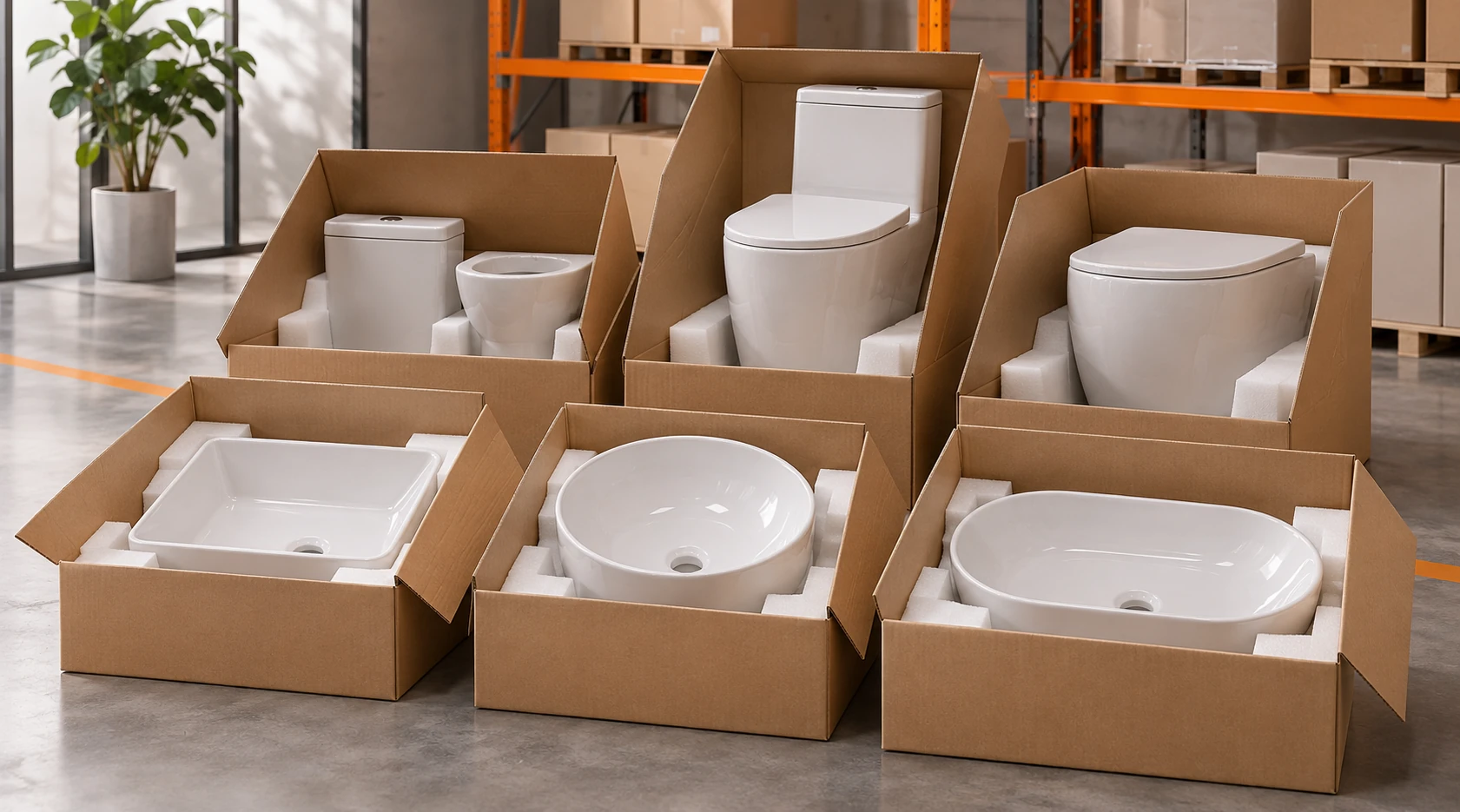
Breakage is often discovered far from the loading point, when proving where it happened is difficult. A packing specification and a clear loading record make prevention and claims handling more practical.
Specify the packed unit
Start with the product’s vulnerable points: thin rims, projecting corners, tank edges and loose hardware. Ask how the item is immobilised inside its carton and separated from other parts. Record carton dimensions, gross weight, inner materials and any orientation rule. Packing for a small basin may be unsuitable for a long ceramic vanity top.
If drop or transport testing is required, agree the standard and actual test configuration before production. Do not assume a carton is validated because a photograph shows foam or a “fragile” mark.
Make mixed orders traceable
Each carton should identify model, finish, quantity and the buyer’s receiving reference. Match the carton sample to the packing list and purchase order. For mixed models, plan a loading sequence that allows counts to be checked without dismantling the entire load at destination.
| At final inspection | At container handover |
|---|---|
| Open agreed sample cartons; check edge protection and parts | Record container condition before loading |
| Compare marks with approved artwork and model codes | Photograph stowage and any void filling at useful intervals |
| Count packed units by model and finish | Reconcile loaded totals with the packing list |
| Segregate damaged or unapproved cartons | Record seal number and final documents |
Plan around handling, not just volume
Avoid unsupported stacks and concentrated loads on delicate cartons. Confirm whether pallets, slip sheets, bracing or other restraints are appropriate for the order and route. The loading plan should account for weight distribution, access and the carrier’s requirements. A container that is full by volume is not necessarily safely packed.
Ask for a packaging drawing, not just a carton photograph
The drawing or packing instruction should show the product orientation, support points, protective inserts, loose-part location and closing method. Mark the areas most likely to chip or take a concentrated load. Check that heavy accessories cannot move against glazed ceramic during handling. If the supplier changes the carton size or insert material, treat it as a packing revision and review it against the approved sample.
A buyer may request a trial shipment or transport test where the route and product risk justify it. Agree the actual packed configuration and acceptance criteria first. A “fragile” label does not replace mechanical protection, and a passed test on a different model does not validate a large vanity top or a differently shaped toilet.
Make the container plan auditable
Before loading, check the container for visible damage, moisture and cleanliness, then record its identifier. A stowage plan should distinguish heavier cartons, fragile long items, mixed-model zones and any pallet or restraint scheme. Photograph the load at stages where the layout and protective measures can still be seen. At the end, reconcile model-level counts, seal details and shipping documents with the approved packing list.
| Potential failure | Control to agree before loading |
|---|---|
| Wrong model in a correctly marked carton | Open and verify a sample against the product and carton code |
| Edge damage hidden by outer carton | Inspect internal protection in selected packed units |
| Unstable mixed-model stack | Document weight order and restraint method |
| Claim without traceable evidence | Retain dated photos, carton IDs, count and seal record |
Prepare the destination team
Give the importer a receiving instruction that identifies the model marks, count by finish, damage-reporting window and photographs needed for a claim. Keep damaged cartons and inner protection until the issue is documented. A clear handover cannot eliminate breakage, but it reduces ambiguity about what was packed, loaded and received. The contract should identify who bears each transport risk under the agreed trade term.
Retain dated loading photographs, carton references and a signed count where available. These records do not replace insurance or contract terms, but they help establish what was loaded. CADIA’s OEM / ODM page identifies packaging as a discussion topic; request model-specific packing details through contact.